How to tell good khoos from bad
Two khoos pieces can look alike in a photo, yet one lasts for years and the other comes apart in months. These are the signs that tell them apart, and you can check them by hand in a few minutes.
An even plait
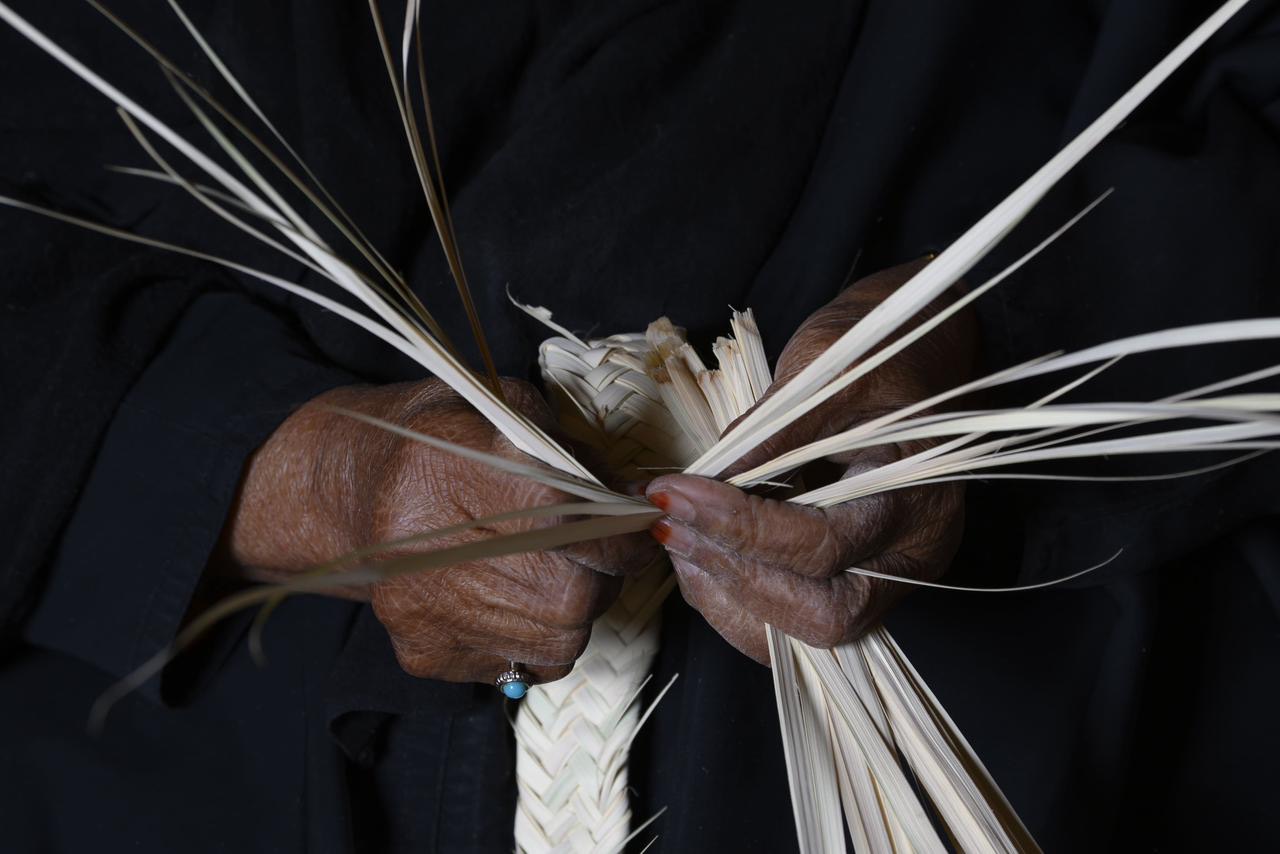
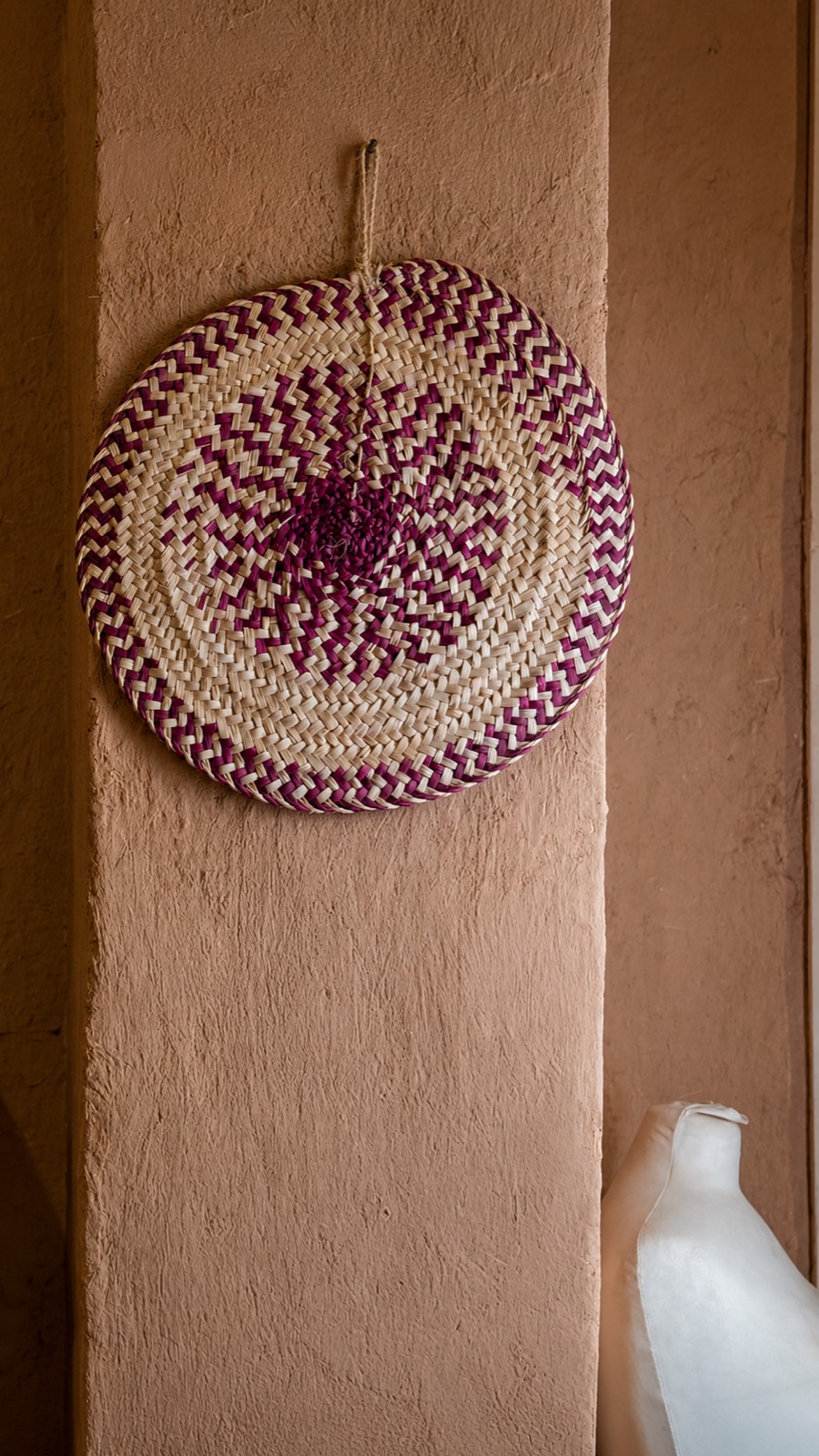
Plaiting the leaflets into a band is the first thing that shows the maker’s skill. In a good piece the plaits are close and tight, the band keeps the same width from end to end, and there are no gaps between the leaflets.
Hold the piece up to the light: if light comes through many gaps, the plait is loose and will slacken with use. Press the surface with a finger; a good plait springs back and does not shift under your hand.
The leaf and its color
- Good natural khoos ranges from ivory to light gold, and the tone is close across the whole piece.
- A greenish tint means the leaf was not fully dried; it may shrink or go moldy later.
- Grey or black spots and a damp smell are signs of mold. Don’t buy the piece.
- In a good piece the leaflets are of similar width, with no burnt or broken ends.
Flexibility: bend a small edge
Good khoos is supple: it bends under your hand and springs back without cracking. Leaf that crackles or snaps when bent was over-dried or stored too long somewhere hot, and it will crumble with use.
Stitching between bands
Mats, sofras and baskets are made of plaited bands sewn together. Look along the seam: in a good piece the stitches are evenly spaced and tight, and the bands meet with no gap. Wide stitches or overlapping bands are a sign of rushed work.
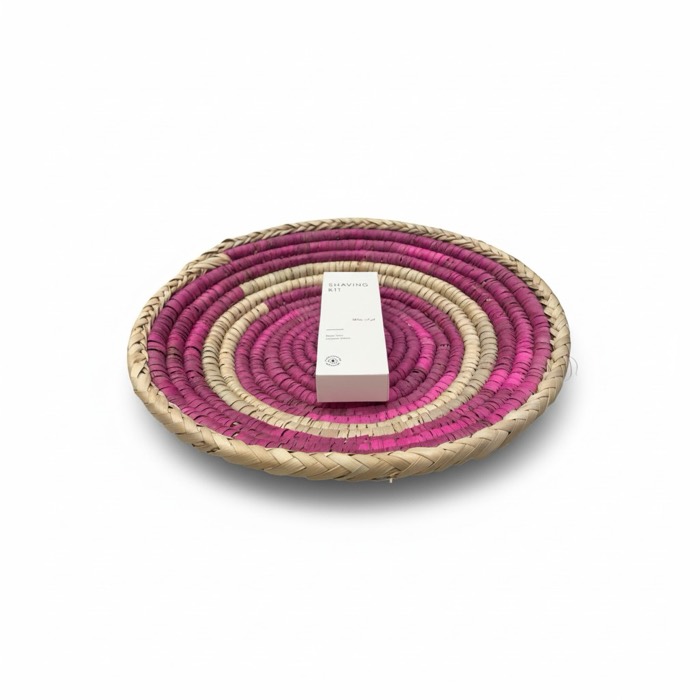
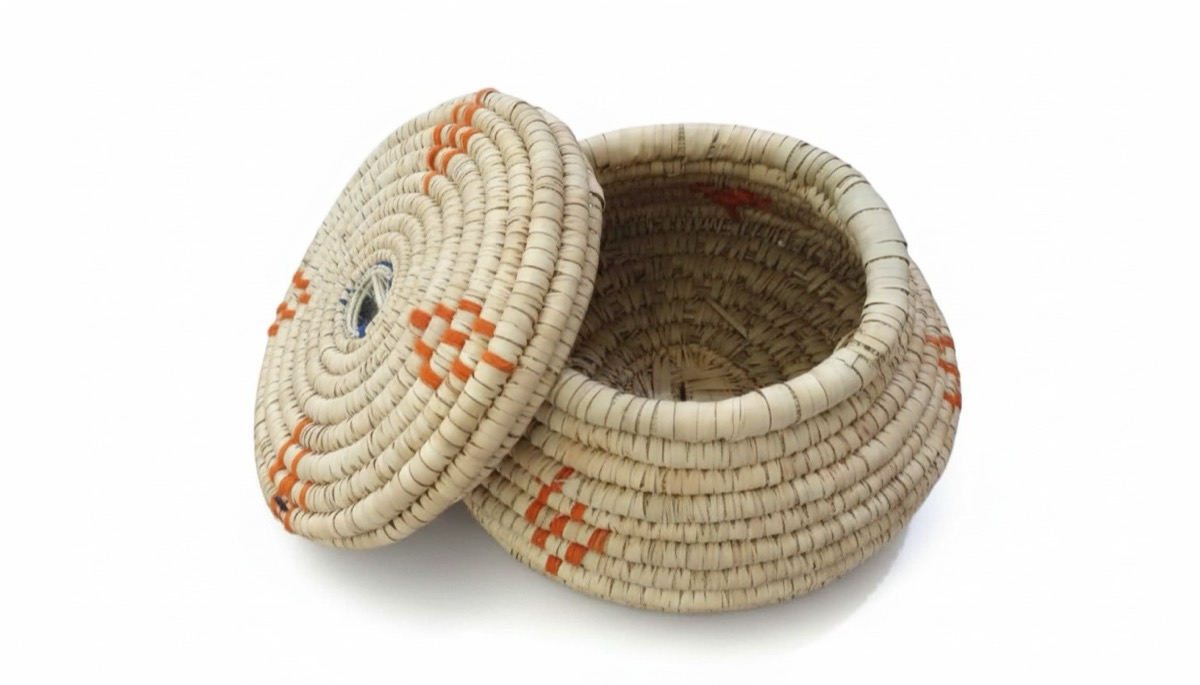
In coiled pieces such as the sahan and motabiqia, the coils are of even thickness and sit tight against each other, with the stitches in neat lines.
Edges and handles
- Run your hand along the rim: it should be smooth and tightly folded, with no ends sticking out to scratch hands or fabric.
- Check where a band starts and ends, the usual place for unraveling to begin. In a good piece the end is tucked into the plait.
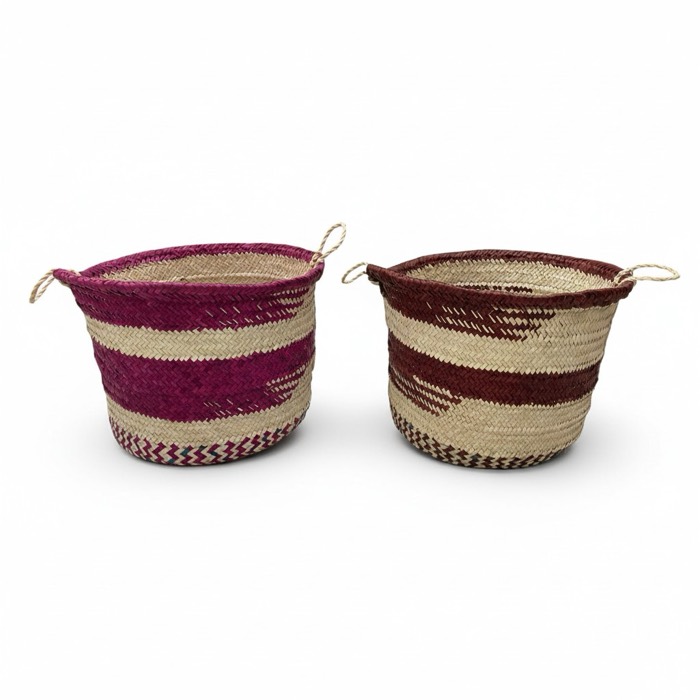
- On totes and baskets, give the handle a gentle pull: it should be sewn into the body at more than one point, not tied on with a single knot.
Dye fastness
Colors on good khoos are even and leave nothing on your fingers. Rub a dyed area with a slightly damp white tissue: if color comes off, the dye is not fast and will fade or stain whatever it touches. This matters most for pieces used with food.
Shape and balance
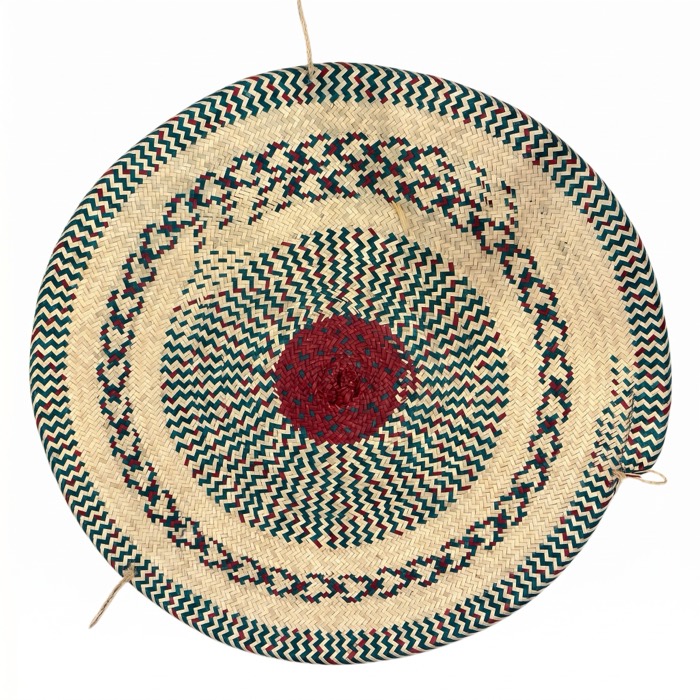
Set the piece on a flat surface. A sofra or sahan lies flat without rippling, a basket stands without leaning, and both sides match. Clear warping usually means the leaf was plaited at uneven moisture, and it can get worse over time.
Natural variation is not a defect
Because every piece is handmade, you will see small differences in shade or in where the pattern falls from one piece to the next. That is the character of the craft, not a flaw. Real defects are the ones that weaken a piece: a loose plait, wide stitching, open edges and mold.
Real khoos or plastic imitation?
- Natural khoos is matte, shows the fine veins of the leaf, and its leaflets vary slightly in width and color.
- Plastic strips are glossy and perfectly identical, with sharp, regular cut ends.
- Natural khoos has a faint, hay-like smell; plastic has none or smells synthetic.
If you are buying online
- Ask for a close-up of the plait and the edges, not just a photo of the whole piece.
- Check the size in centimeters; photos don’t show true scale.
- Ask where it was made, what it is made of, and how to care for it.
- Read the returns policy before you order, so you know your rights if a piece arrives with a defect.
Want close-up photos of a piece before you order? Message us and we’ll send them. Talk to us on WhatsApp