What is khoos? How palm-leaf weaving is made in Al-Ahsa
Khoos is one of the oldest crafts of the Arabian Peninsula, and Al-Ahsa is still one of its best-known homes. Here is what to know about the material and how it is made.
Khoos: the leaf of the palm
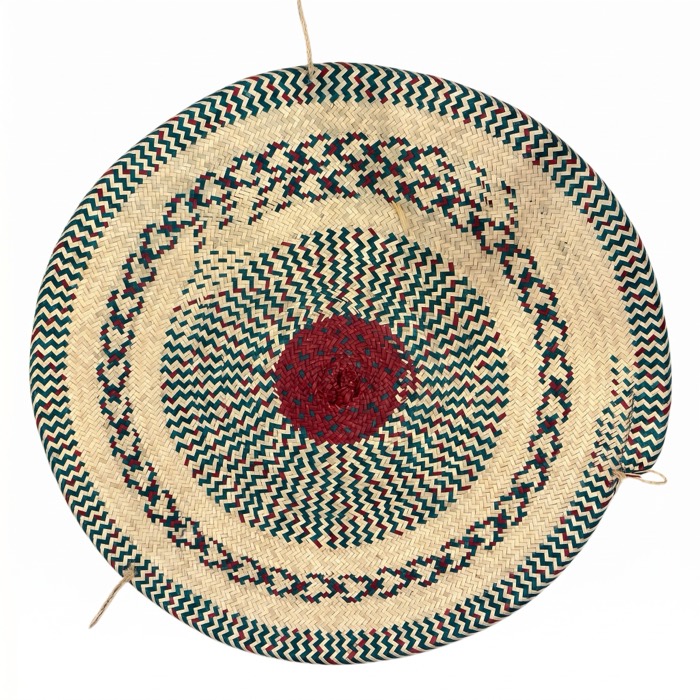
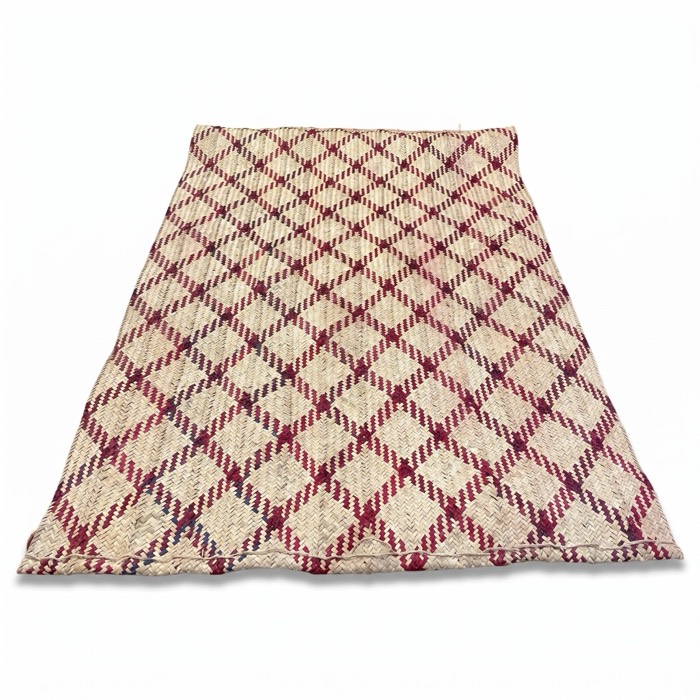
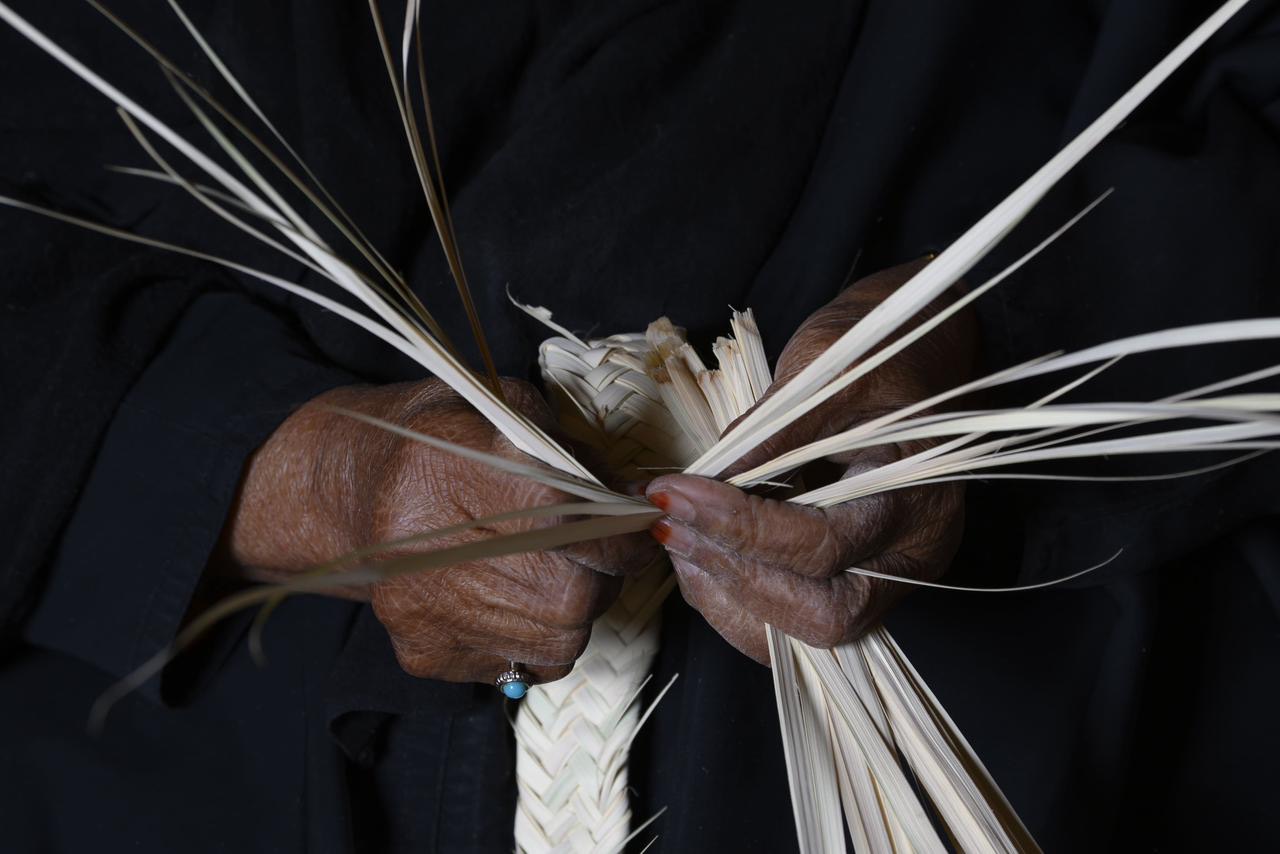
Khoos is the long leaflets that grow along the stem of a palm frond; the frond with its leaflets is called sa’af. For centuries people across the Arabian Peninsula have plaited khoos into household pieces: floor mats, dining mats, baskets and fans.
Al-Ahsa is one of the best-known homes of the craft. It is one of the largest palm oases in the world, was inscribed on the UNESCO World Heritage List in 2018, and was named a UNESCO Creative City of Crafts and Folk Art in 2015.
How khoos is made
- Gathering: fronds are cut from the palm and the leaflets are stripped from the stem.
- Drying: the khoos is dried in the sun until it lightens, then sorted by length and color.
- Dyeing: part of the khoos is dyed in the colors the pattern needs; the rest keeps its natural color.
- Soaking: the khoos is soaked in water before weaving so it stays supple and does not crack.
- Plaiting: leaflets are plaited into a long band called a safifa, and the bands are sewn together into mats and baskets.
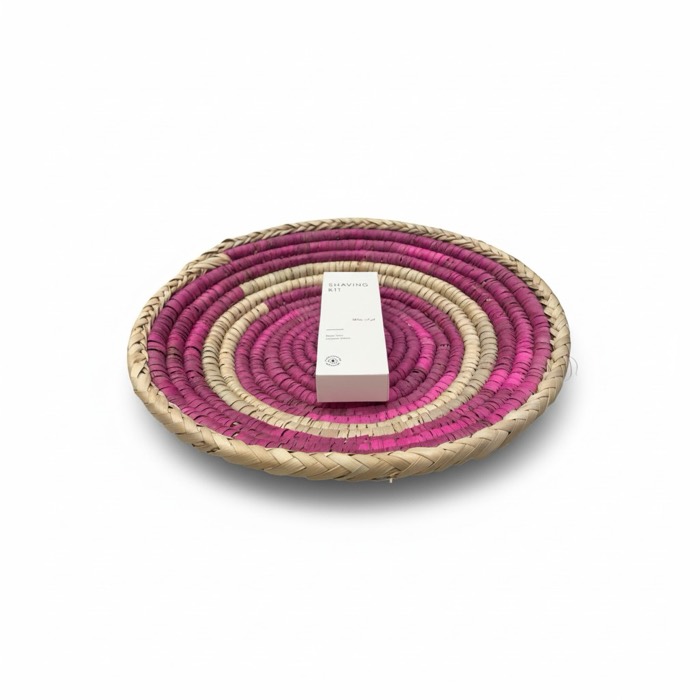
- Coiling: for coiled pieces such as plates and lidded baskets, khoos is wrapped around a bundle of fiber and stitched round after round.
Why hospitality chooses it
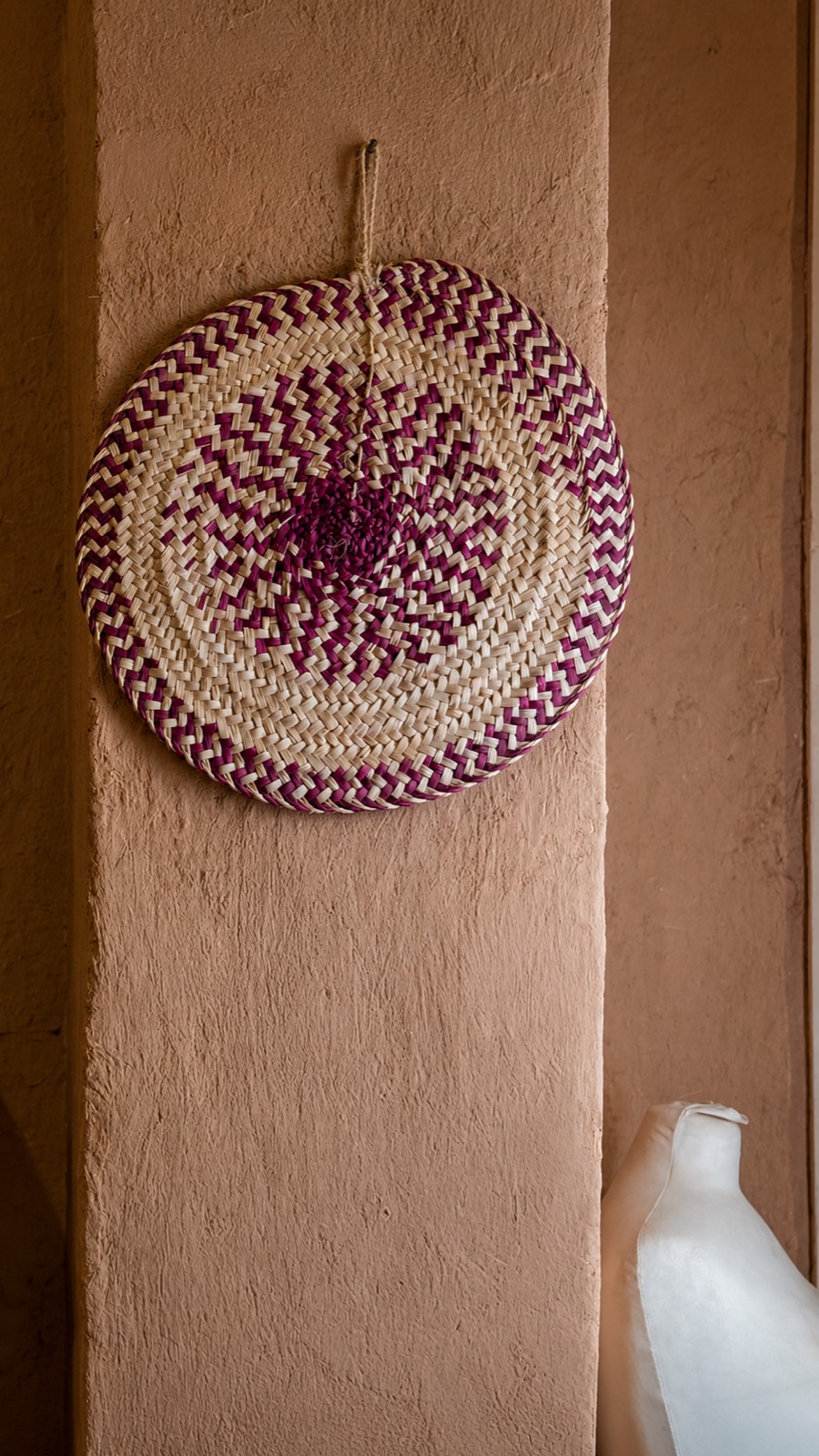
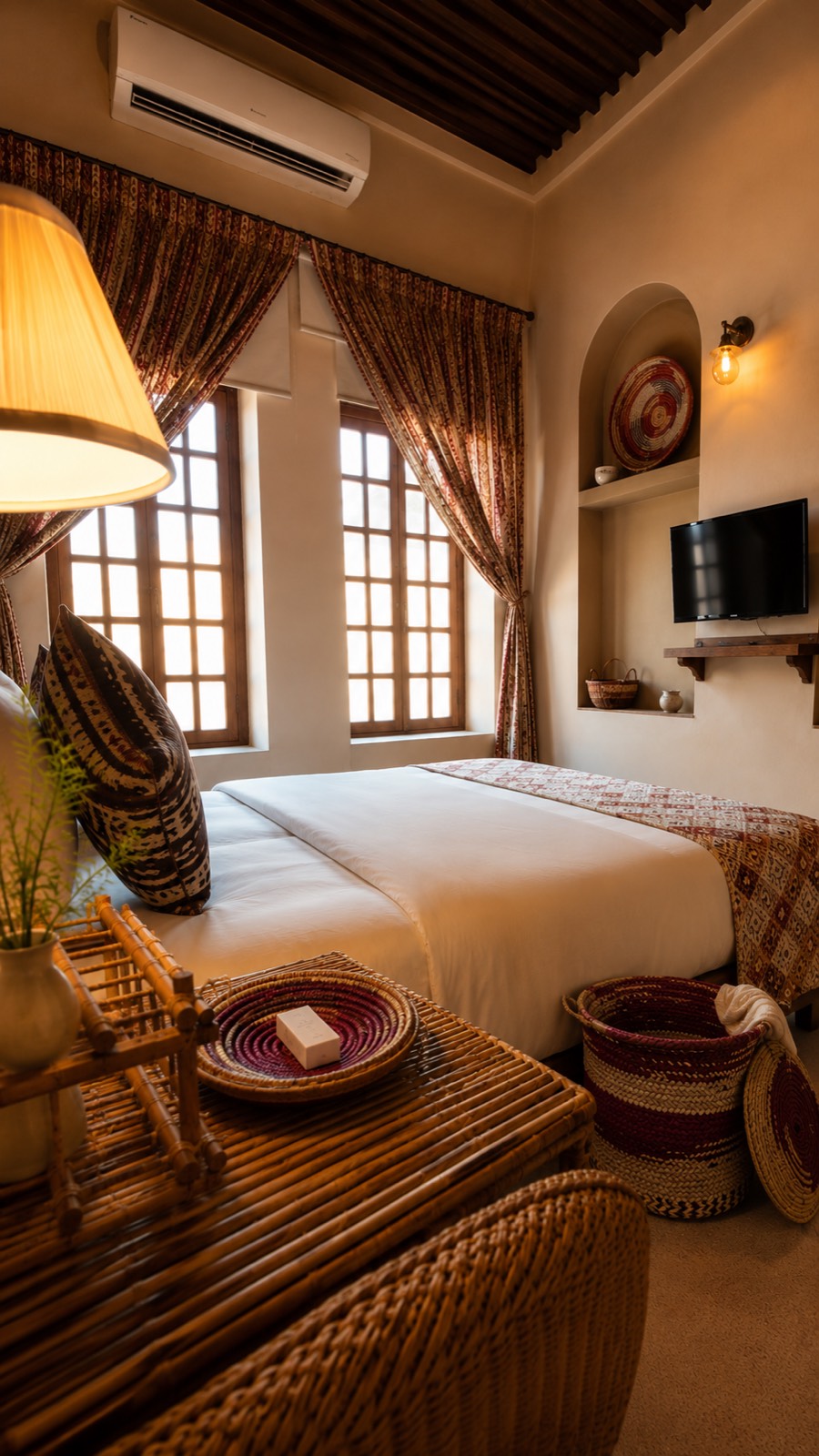
Khoos is natural and light, and it carries a sense of place for anyone visiting Saudi Arabia. Hotels and restaurants use it for room baskets, serveware and wall décor, and companies choose it for gifts with a Saudi character.
Caring for khoos pieces
- Wipe with a dry cloth or a soft brush.
- Keep away from water and humidity for long periods; if it gets wet, dry it in the shade.
- Avoid long hours of direct sunlight so the colors keep their tone.